Showing posts with label TJEd. Show all posts

Monday, October 23, 2017

Convergent Messages About Helicopter Parenting

I have always struggled with following through.  Something about that last stage of commitment is so challenging!

I pray for inspiration in homeschooling, personal spiritualiy, personal studies...and then get distracted :).  I tell my kids I will commit to something and then the schedule gets "out of control" and we don't do it.  Or I tell friends and family...same thing.

Image result for TJEd for TeensThis last month it has come to the forefront more frequently as I participate in the "Thomas Jefferson for Teens" 22 day "Real You" challenge.  Each day we ask ourselves an introspective question and take a day (or two) to answer it.  Distraction, integrity and commitment have all come to the forefront as challenges I face.  It has been pretty cool to see the patterns and recognize them for what they are.

Even last night, I was reading in a book about visiting teaching and in it, in a hypothetical situation, Joseph Smith was addressing a group of spirits in a pre-earth life scenario, telling them the challenges that they would face.  After sharing his own peers' challenges of being driven from their homes, losing their virtue and their lives to their enemies and being slandered, he turns to a group of individuals from our day and warns that our trial will be prosperity and peace. "You will let yourself get distracted."  That was the key of the message.

He refers to a situation in which a visiting General Authority tells a group to get ready to leave for Jackson County, Missouri at 5 am the next morning.  He warns that only 4 out of 10 will consider it and only 1 will actually go. "You will say...

"If I hear it from the prophet himself, then I will go."

"I have strawberries that are ripe.  I will hurry and get those on and then do head out."

"He can't mean me. I have my mother to take care of and am not very strong myself."

"John can't possibly get work off for at least another week."

The book is about visiting teaching and not putting off our responsibility to reach out, administer, serve and love in the Lord's way, but it hit a chord with me.

I was getting super discouraged last week about my lack of consistency with my kids' scholastic and nurturing needs on a basic level.  I took time to look at the schedule I felt inspired to put up at the beginning of the year, prayed about whether it was still applicable or if it needed some tweaking, and took a deep breath and felt some peace.  I do have an inspired plan and I can trust it.  My son Kel said that one thing he has learned is the rewards of following an inspired schedule.

I think my inner feistiness runs so deep that if anyone including myself tells me what to do, I tend to fight it :D.

Image result for understood betsySo, referring to the "convergence" in the title, I also picked up my reading for the "Mentoring in the Classics" class I am taking online.  The book is "Understood Betsy" and is a refreshing look at parenting.  It takes a look at parenting the "non-helicopter" way, to put it simply.  I tend to hover and worry about my kids when really, they need some freedom and some confidence in their ability to take on problems, figure them out, struggle through failure and succeed.

It was interesting that I also came across a letter I saved from Tova.  It was written shortly before she left on her mission:

"Thanks for the wonderful year, Mom!  You've allowed me to step out and take more control over how my life is going to turn out.  Though you've given me the chance to make mistakes, you've always been there for me to talk to and to get love from."

One tenet of the TJEd Education philosophy I always struggle to incorporate is "You, Not Them."  I see danger in immersing myself so deeply in my own projects and studies that my children are left feeling less important than "Mom's current project."  I know there is balance required and constant evaluation.  The spirit of the application needs to be two ideas combined:
#1 My child has an inner drive to succeed and will rise to it...even without my help and perhaps even better without my help.
#2 My overall focus in my studies and life's mission will always include my children.

Marjorie PayI have a quote up in my bathroom that I refer to often. It is actually more of a historical selection from an article about one of my heroes, Marjorie Hinckley.
Gordon and Marjorie established a home of love, mutual respect, hard work, and gospel living. Daily family prayer provided a window for the children to see their parents’ faith and love. As the family prayed together, the children also sensed the nearness of their Father in Heaven.
The Hinckley home was a place of few rules but great expectations. Marjorie spoke about things that were not worth a battle. Describing a parenting approach that she shared with her husband, she said: “I learned that I needed to trust my children, so I tried to never say no if I could possibly say yes. When we were raising a family, it was a matter of getting through every day and having a little fun along the way. As I could see that I wasn’t going to be able to make all of my children’s decisions anyway, I tried not to worry about every little thing.”35 As a result of their parents’ trust, the children felt respected and gained experience and confidence. And when the answer was no, the children understood that it was not an arbitrary restriction.
Few rules but great expectations.  I am excited to try and trust the Spirit more, make less excuses and just act on my inspired lists.  I am excited to see what my children accomplish as I hand over more and more of the ownership of their life's choices in (hopefully!) an inspired way, one that shows love and support and confidence in their own abilities.

Humorously, a song is going through my head:
"Take a deep breath, pick yourself up, dust yourself off...and start all over again!"  :D

Thanks, Frank Sinatra!

Friday, June 7, 2013

Milestones that Matter

I loved this article shared by my dear friend, Andrea.  It captures something I have been thinking about a lot lately, as I see my Pipalicious come up to me and talk about how she is trying harder to be nice or share or work hard.  I have recently been reviewing the Thomas Jefferson Education literature I brought with me, about the different phases of learning: core phase, love of learning, and then scholar... (and then...and then :)...)

Here are a couple favs:
There are cultures where parents define intelligence as simply being able to know something needs to be done, and doing it. There are places where learning is not taught, but caught; where being a quiet and astute observer is how a child learns the skills he needs to thrive. 
Research shows that American parents focus on cognitive stimulation, enrichment and development more than parents in many other cultures, such as the Dutch or the Italians, who prioritize different things like routines or even-temperedness. We even justify free play and recess for their cognitive benefits, and talk about how play lays the foundation for academic skills. 
Every society values its own skill sets for its own reasons. The problem in America is that, while we excel at raising spectacularly verbal kids, we have lost sight of other values that we need to foster in our children. 
Now, as with all things that are not straight from the mouth of prophets, I don't endorse the whole thing as truth for me or anyone else...
--I'm not going to start carrying Spooner around all the time
--I will still be prayerfully careful with what I allow my children to watch
--I am not going to have Papaya (2) and Spooner go around diaperless from now on

However, these may be just the thing that someone else feels prompted to do to solve their own parenting issues!  Gotta love agency and diversity :).

Thanks, Andrea!  Just had to share...and keep, for my own future reference.

Link 
The Milestones that Matter Most
Christine Gross-Loh
  
"M-a-t" "M-at." "Mat." My 6-year-old pored over her Bob book, painstakingly sounding out each word. I listened and worried; her older brother was able to read those same words at a much younger age.
It's natural to compare our children and fret over their development. We are encouraged in the United States to look at a child's expected milestones and make sure they are meeting them on time. It wasn't until I started researching global parenting that I discovered how many of a baby's and child's stages and milestones actually aren't universal. What we expect of a child at any given age is influenced and shaped by culture. Viewed through the prism of culture, some notions of "normal" look totally different:
Babies from parts of Africa, the Caribbean or India whose bodies are constantly jostled and vigorously handled by their mothers reach motor milestones earlier than babies in Western cultures, who spend a lot of time on their backs.
Babies in some indigenous cultures who are rarely put down skip the crawling stage entirely.
Vietnamese toddlers don't go through potty training as we know it, because they've been more or less diaper-free all their lives.
In other cultures, babies are never expected to learn to sleep through the night on their own, the terrible twos don't exist and teenagers are not expected to be in conflict with their parents (and they aren't). And as for us? American parents are encouraged to talk, talk, talk to our kids, even when they're babies and can't respond back. Our children become fantastic negotiators. Even as we roll our eyes with exasperation, we are proud of our little budding lawyers. We know that talking to our kids is good for them. We associate verbal prowess with intelligence and some of us may harbor the secret hope that their ability to nag us into capitulating means they will get high scores on the SATs and attend a good college. But not all parents in the world agree. There are cultures where parents define intelligence as simply being able to know something needs to be done, and doing it. There are places where learning is not taught, but caught; where being a quiet and astute observer is how a child learns the skills he needs to thrive.
Research shows that American parents focus on cognitive stimulation, enrichment and development more than parents in many other cultures, such as the Dutch or the Italians, who prioritize different things like routines or even-temperedness. We even justify free play and recess for their cognitive benefits, and talk about how play lays the foundation for academic skills.
Every society values its own skill sets for its own reasons. The problem in America is that, while we excel at raising spectacularly verbal kids, we have lost sight of other values that we need to foster in our children.
Thinking about others, not just themselves: Learning to get along with others is top priority in other cultures. Spanish parents I spoke with told me they stimulate their babies with people, not educational toys. They take them out into public early, welcoming the in-your-face interaction with strangers that most Americans find intrusive. Japanese moms call their babies' attention to relationships more than objects the way we tend to ("Look at that big, grey elephant!"). In one study, when Japanese and American fourth and fifth grade children were asked why they shouldn't hit, gossip or fight with other kids, 92 percent of the American kids answered "because they'd get caught or get in trouble." Ninety percent of the Japanese kids asked the same question responded, "because it would be hurtful to someone else." Research indicates that in cultures which promote collective values -- where children watch people help each other farm, build homes and so forth -- sharing comes more easily to kids than in more individualistic, competitive cultures like our own.
Hanging up their own jackets: Around the world, kids run errands, take buses and trains by themselves, keep track of their own belongings, use knives and cook at an age when we American parents are still putting on our kids' socks, picking their jackets up off the floor, and monitoring what they can watch on TV.
Caring for their siblings: One Swedish boy I interviewed has been bringing his little sister home from school on the bus since he was in elementary school, making her a snack and supervising her homework. When we were raising our kids in Japan, helping out was so valued that our son's school homework included doing chores like watching or feeding his baby sister. One Japanese mom I knew regularly left her kids at home while she went grocery shopping; in our country, this would get her accused of negligence. In our country, we worry that asking siblings to care for each other puts an undue burden on their individual potential. The opposite is true: when we ask our kids to care for one another, it unleashes their potential as nurturing, socially responsible human beings.
It's not surprising that well-intentioned parents cultivate cognitive intelligence and individual achievements as assiduously as we do. These are, after all, such important markers of success in modern-day America. But our focus on outcomes is leading us to look at milestones all wrong -- as a series of boxes and achievements to check off a list on our way to a goal. We focus on our kids' ability to read when they are at an age when we should be focusing on their kindness and character. We worry about overburdening them with chores because they have to do their homework, when we should be cultivating self-help skills that will make them self-reliant, and sending them a clear, unambiguous message: yes, academic achievement is important, but becoming kind and responsible is, too. These are all milestones we don't want to miss.
My daughter's reading still hasn't taken off. But when she closes her book for the night, she reaches for her little sister's hand and takes her to the bathroom, helps her change into her pajamas, and fetches her toothbrush. I've finally realized that she is not doomed to failure, but that she is just developing differently and that her different pace will allow us the luxury of reading aloud for much, much longer. After all, she's only 6 years old. It's time to give ourselves permission to focus less on Mandarin lessons and math enrichment and trust we haven't doomed our kids to failure if we don't sign them up for club soccer at age 8. We can give ourselves permission to concentrate more on fostering kindness in our children, teaching them perseverance and making sure they know how to hang up their own towels.

Sunday, April 7, 2013

Freedom without virtue? Impossible.

There are some things worth getting mad about...

Freedom is one of those. Or at least, the lack thereof. 

Movies like "Amazing Grace" and books like "Les Miserable" stir something deep within me as I see people battling for the cause of freedom.  It is one of the things I am born to do: champion the cause of Liberty and learn the language of Freedom, as I call it.

My definition of "the language of Freedom"? To be able to articulate, persuade, and reason in behalf of the cause of liberty and freedom.  Very few things are more important to me than that; in fact, God and family are the only ones.

In order to learn how to this, I felt inspired to turn to something called "Leadership Education." According to Oliver DeMille, in his powerful lecture last year titled "7 Keys and 4 Phases,"  the key ingredients in a leadership education is the study of classics and the study of history.  

When I heard him say that last year, I though, "Great!  That's what we are doing in our homeschool!" 
 For the past few years, we have been working our way through an incredible historical series by Susan Wise Bauer:


These books have everything in them...all from sources as original as you can get!  You read all sorts of crazy things about kings and messengers, generals and slaves, sometimes in their very words :).  Her writing style is incredible, with stories that are written as they were lived...as an adventure and about real people!

And, in studying this history, I can see how important it is to know our history so that we may learn from it!

In all the cultures and time periods I have studied so far, government cannot be good government without virtue of the people!  Time and again, a virtuous person will come to power, do good on his or her "watch" in power, and then the society will topple and be overthrown by the corruption and deviousness of the next individual or group in power.  Time and again.  You get people in power who are trying to use the power of the government to do good things and find that they have to fight continuously against the corruption of people around them!  One poor chap in China tried to abdicate three times and retire to a monastery just so he could get away from it all...but he was too good and the people would not let him go!

So, going back to my original passion about freedom, I want to talk about that a little bit more. Want to really get my dander up? (Listen carefully, Daddy Clyde :)...here's what you've always wanted: the key to making me ready to fight!)  
Tell me the government has "told" me yet another way to run my life.  
Do you know who "the government" is?  My neighbor.  It is no all-powerful, all-knowing entity of accumulated knowledge.  It is the body that we have given the power to create laws on behalf of all of us to maintain our freedom, by securing some rights.

And do you know something else?  We lose freedom when people worry about personal "rights" that they want "secured" out of fear of the lack of virtue in others.

Let's look at that word: Virtue.  To me, part of that word "virtue" is the quality in a person that drives them to take responsibility for themselves and those in their stewardship in a way that respects the rights and responsibilities of others...all with a sense of accountability to some higher good.

Here is another way to look at it :):


Look familiar :)? We can also look at Cicero's summary of what he calls "natural law."  What is natural law? First of all, Cicero defines Natural Law as "true law." Then he says:
"True law is right reason in agreement with nature; it is of universal application, unchanging and everlasting; it summons to duty by its commands, and averts from wrongdoing by its prohibitions.... It is a sin to try to alter this law, nor is it allowable to repeal any part of it, and it is impossible to abolish entirely. We cannot be freed from its obligations by senate or people, and we need not look outside ourselves for an expounder or interpreter of it. And there will not be different laws at Rome and Athens, or different laws now and in the future, but one eternal and unchangeable law will be valid for all nations and all times, and there will be one master and ruler, that is God, over us all, for he is the author of this law, its promulgator, and its enforcing judge. Whoever is disobedient is fleeing from himself and denying his human nature, and by reason of this very fact he will suffer the worst punishment." (The Five thousand Year Leap, p. 40)
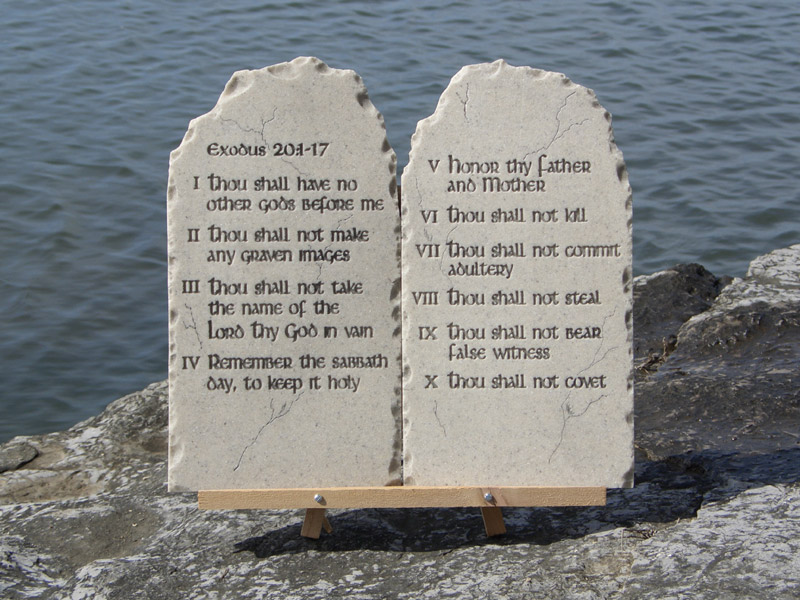
Just think.  If everyone observed these simple maxims, found in the 10 commandments and their consciences, and echoed in Cicero's "Natural Law," would we need government?  No.  Of course not, other than perhaps as some minor local tax collector who would gather funds to build roads or as some judge between minor cases of misunderstandings.  People would do what is good and right and fair, without anyone trying to force them to do it, and without anyone trying to get out of it :).

So, going back to what I have read in history and in my study of governments and society, there is no possible form of government where people can be free to obtain and use their money and resources to support their lives and families without virtue of the people. None. There is no such thing as a government powerful enough to force people to do good, without giving it the power to force them to do evil.

Historic and modern events support the common idiom:


Absolute power corrupts...absolutely.

The Founding Fathers of the United States of America knew this from their own study of history, thus creating our Constitution with important limitations and safeguards.  However, even they knew that only with virtue of the people would we be able to reap the benefits of their work, and use the Constitution for the intent for which it was created.


We must echo Elaine Dalton's call for a "return to virtue" as we look at society.  As people look to their hearts and their God, in whatever form they worship Him, they will know what they must do, and what that answer is for themselves.


Ahhhh.  But how to encourage people to do that, to choose to sacrifice and be virtuous over the pursuit of selfishness?  How do we encourage people to not be dishonest, to not take advantage of one's neighbor, to honestly look at what they have and what they need and use the excess to reach out and help others?  

That remains the question to be answered before we can answer the question how to maintain a government that perserves our freedom.

It must begin, one person at a time, and it must begin today...with you and with me.d

Obviously, I have a long way to go in my effort to learn how to make my passion for freedom articulate and clear :).  I will trust in God and keep doing what I can, one day at a time. 

**************************
Excerpt from "The Divinely Inspired Constitution"
U.S. citizens have an inspired Constitution, and therefore, what? Does the belief that the U.S. Constitution is divinely inspired affect citizens’ behavior toward law and government? It should and it does.
U.S. citizens should follow the First Presidency’s counsel to study the Constitution. 17 They should be familiar with its great fundamentals: the separation of powers, the individual guarantees in the Bill of Rights, the structure of federalism, the sovereignty of the people, and the principles of the rule of the law. They should oppose any infringement of these inspired fundamentals.
They should be law-abiding citizens, supportive of national, state, and local governments. The twelfth Article of Faith declares:
“We believe in being subject to kings, presidents, rulers, and magistrates, in obeying, honoring, and sustaining the law.”
The Church’s official declaration of belief states:
“We believe that governments were instituted of God for the benefit of man; and that he holds men accountable for their acts in relation to them. …
“We believe that all men are bound to sustain and uphold the respective governments in which they reside.” (D&C 134:1, 5.)
Those who enjoy the blessings of liberty under a divinely inspired constitution should promote morality, and they should practice what the Founding Fathers called “civic virtue.” In his address on the U.S. Constitution, President Ezra Taft Benson quoted this important observation by John Adams, the second president of the United States:
“Our Constitution was made only for a moral and religious people. It is wholly inadequate to the government of any other.” 18
Similarly, James Madison, who is known as the “Father of the Constitution,” stated his assumption that there had to be “sufficient virtue among men for self-government.” He argued in the Federalist Papers that “republican government presupposes the existence of these qualities in a higher degree than any other form.” 19
It is part of our civic duty to be moral in our conduct toward all people. There is no place in responsible citizenship for dishonesty or deceit or for willful law breaking of any kind. We believe with the author of Proverbs that “righteousness exalteth a nation: but sin is a reproach to any people.” (Prov. 14:34.) The personal righteousness of citizens will strengthen a nation more than the force of its arms.
Citizens should also be practitioners of civic virtue in their conduct toward government. They should be ever willing to fulfill the duties of citizenship. This includes compulsory duties like military service and the numerous voluntary actions they must take if they are to preserve the principle of limited government through citizen self-reliance. For example, since U.S. citizens value the right of trial by jury, they must be willing to serve on juries, even those involving unsavory subject matter. Citizens who favor morality cannot leave the enforcement of moral laws to jurors who oppose them.

Friday, January 11, 2013

Mysterious passages revealed...

I just thought this was so cool!

It occurred right after Oliver Cowdery and Joseph Smith received the Aaronic Priesthood and baptized each other:

 74Our minds being now enlightened, we began to have the ascriptures laid open to our understandings, and the btrue meaning and intention of their more cmysterious passages revealed unto us in a manner which we never could attain to previously, nor ever before had thought of.

 How amazing it would have been to go back to the scriptures after being baptized and receiving the priesthood and seen a marked difference in your ability to discern truth and understand the scriptures!

Do I take that for granted, the gifts I have been given to increase my understanding of the scriptures?  The Priesthood in my home?  My baptismal covenants?  God truly does want us to learn and grow!  My kids have asked before why we pray before each class...it ends up that we pray several times a day this way :).  I tell them it is so that the Holy Ghost can increase our capacity to discern truth, remember it, and apply it.  I know that the Holy Ghost can enlarge our memory.  I just need to trust that what I get is enough and not worry about what I am not remembering and go forward in faith...

...even with tired mom-brain :).

I still remember sitting in a Thomas Jefferson Education seminar when I had four little kids six and under (Isaak was in heaven at this point), and having them tell me that education was a life-time ability, and that I had a mission, unique and specific to me and my talents.  A mission, granted, that included motherhood, wifehood and sisterhood--all with a little flair that was "Mary-ness", with my unique set of talents, weaknesses, and abilities.  Kind of like a quilt :).  The motherhood, wifehood and sisterhood are the quilt--very general in definition; my personal way of doing it, embracing it, and creating it are the pattern of the quilt.  I have had people be disparaging about "missions," claiming that the pursuit of such is a competition with our "other" roles.

I disagree.  I believe discovering our God-given mission includes those roles.  It was as I have pursued my talents with my family, seeking to inspire and include them, that I have found an increased satisfaction with my role as a mother.  It became less generic, less like trying to figure out what "the right way" was.  It was as I asked myself, "what can I do to serve my family and learn at the same time?" that a whole new world has been opened to me!  Pursue what you are passionate about...with your family.  It looks a lot different than an exclusive, "all-about-me" ambition that I see in the lives of so many women...like what they are happy and passionate about (you know, what "fills their cups") has to be distinct from their roles of womanhood.  Why not include it?

For instance, I love art...love to do it!  However, my time doing it is a little limited :)...not to mention the potential mess. Yet, I have tried (and am still trying) to draw, sketch, paint and even have little art classes with my kids, knowing that my role as a mother is not only to meet immediate needs, but to inspire them to try things.  It has been mainly when I am drawing next to them on my own project that I see them get excited about it and try harder to do something more with it.  When I welcome them into the project, not shut them out, worried that they will mess it up or are "competing" with my desire to create, my ability to mother increases, as does my ability to pursue a talent.  Cool stuff!

Similarly, with my piano playing, when I have tried to put in a little more practice time here and there, showing a struggle in trying to master a piece, or playing to fulfill my own needs, my kids see the patience, struggle, and joy that come with piano playing and their time on the piano increased.

However, when I seek to find fulfillment outside my role as a mother, it feels wrong...for me at least.  I pursue learning in politics because I want my children's freedom to be preserved.  I study to inspire my children and be able to teach them in their homeschooling...woohoo!  Love to learn!

Anyway, I digress, but I know that the presence of the priesthood and the Spirit can increase my capacity, and that I can find satisfaction in my role as a mother as I explore my unique ways of being a mom and inspiring my family! :)

Friday, August 24, 2012

Homeschooling at our House: "Master plans"

On my family blog (link), I am in the process of posting a four part series of my....

*drumroll, please.....*

MASTER PLAN!!!!! MWA-HA-HA-HA!!!

In the first one, I have the "intro" or "why," and then I am breaking it down into:

Part 1-Daily
Part 2-Weekly
Part 3-Monthly
Part 4-Yearly

If I was as cool as my good friend Marni, I would have it in a cool spreadsheet, complete with awesome quotes and a cool picture of "cheerio lady" somewhere, but, as it is, at least it is posted :)...

(You should see her post on "The Cheerios Lady (aka a Mother's sweet revenge)"(link) --so hilarious!)

Wednesday, November 4, 2009

How to like myself while doing a Thomas Jefferson Education at home

How to like myself while doing TJEd
On my way home from my plodding jog with a friend, I started composing this idea in my head :-). I really feel that having a good self-image (where we are at, where we are heading) is the basis for being able to winnow through the excess and draw what is good and necessary for ourselves personally in the books we read, the lectures we attend, the advice we get. If we are stable in our core, we can decide what is truly worthwhile in what is around us, and can establish that same stability in our homes. My first thought was this: Don’t listen to people who could be considered OCD give lectures on organization
Self-image:Take 1 minute to list your strengths: areas of knowledge, skills, passions.
Mine? Reading to children, snuggling, listening, serving, math, English.
When we hear that we have great things to do in this life, it is because we came with greatness born in us. If we don’t verbalize it to ourselves and to our children, we give them license to doubt themselves. It is too costly an indulgence to belittle yourself in front of your children. Let them hear you rejoice in your successes, let them hear you shout, "I’m a genius!!" because by so doing, you give them license to recognize the genius within them. My cousin pointed out, when surrounded by a group of gifted women, that she could do a number of those amazing things if it mattered enough to her to take the time. Very likely, there will always be someone, somewhere better at something than you are. Accept that, move forward in the areas you are inspired are part of your personal mission, and only look at others for inspiration, not comparison/competition.
Analogy of Rug: Some are more red, more vibrant, but only you are the special blend of colors, the special weave, that creates the unique beauty that is your life.
Recognize their (and your) genius even when they are content being mediocre. It will pass a lot more quickly if you are patient and love them through it..as it will for you! If you keep beating yourself up for what you are not doing, you will not only be less productive when you actually do study, you will also study less, giving up more easily.
Take another minute and write down what is the most important thing you need to get done on a daily basis to strengthen your CORE. You will find that what is possible to write in a minute, you can probably do in half an hour to an hour or less. Sometimes you can sneak in a smidgeon of each item on your list here and there throughout the day. Now I’m not talking about what you’d like to get done. I’m talking about taking care of your core. I heard a lecturer once say at a convention similar to this that if your core is not there, everything else is hard to take care of.
Now do those things daily, and don’t let the fluff–the things that will never be truly done get in the way. If it is important enough for you to feel good about yourself and set a tone for the day, you will find a way either early in the morning, late at night, or those five minutes of freedom while the kids are off fighting in another corner of the house .
Keep journals–I will be the first to admit that I am not good at faithfully recording in my journal. However, I do have several different "areas" that I try to record ideas when I can. After I had a personal huzzah about how important it is to me, it has become part of my core routine.
1. Personal School journal –an ongoing list of books I have read, authors, page #s, short synopsis, whether I would recommend it or not...I realized I have been getting an education; I could look back and see a shape to my developing ideals and growth! The beautiful thing, it just takes a few minutes (
2. Personal family journal:
1. Gratitude
2. Funny things for blessings
3. Book notes: those quotes that you just don’t want to get away from you, from friends, books, church
4. Homeschooling journal: I have a friend who likes to jot down what they do at the end of each day so she can see what they have actually accomplished amidst the chaos. I just like to take a day every few months and carefully record every seemingly small detail of what we have done, to keep a running idea of how our homeschooling is developing.
Schooling: Perspective
Take another minute and write down the most important things you want your children to know. For me it is that they have a God in Heaven who loves them; that they can reach Him through prayer and studying our core book; and that they each have a genius within them that they will have eternity to develop to accomplish their part in God's grand mission...but they better get started as soon as they can :). It is also that they know how to work and be decent to those around them. And finally, that they know I love them. At the end of the day, sometimes this is pretty much all we have accomplished, but I can look back and see this and know that even if math wasn’t so great that day, and we didn’t have any ah-hah’s, the most important things were taken care of.
Your children are also your classics. Angie Baker, at a UHEA convention a few years ago, when asked about her personal studies with so many children, said that at that time, her new baby, only a few months old, was her classic that she was studying on a daily basis, a classic that was changing daily, and would only stay that way for so long.
Cleaning and scrubbing can wait for tomorrow,
For babies grow up, I’ve learned, to my sorrow.
So quiet down, cobwebs. Dust, got to sleep.
I’m rocking my baby, and babies don’t keep.
Author Unknown
Remember, sometimes only one day in 10 will be perfect. Expect that. I heard that at one of my first homeschooling conventions several years back, and it has stuck with me. Our definitions of "perfect" may range, but mine is one where the kids do their jobs on their own flawlessly (or with minimal help). They are excitedly participating in Momschool and eagerly do what they have committed for their daily studies. People make up quickly after fighting (I am realistic...there will be arguments), and I will spend quality one-on-one time with each of my seven children. I will do all my studies, and dinner will be ready on time.
have a Walden Day–let the bells ring! Keep a basic time schedule (don’t tell the kids your having a Walden Day (), but don’t force anything. See what happens, where your limitations are (like mentoring four children 6 and under while inspiring your oldest two to keep focused on their areas of stewardship (), and then realize,...that is probably what happens on most days!
Free time is not a bad thing. If the kids get finished with their commitments early, let them play outside, run around, read a book, play a game...and don’t feel like you are failing since they are not working on their next publication or reviewing their Latin!
Make it fun!! Don’t be afraid to improvise or throw the daily lesson into the wind if the kids decide they are done...inspire not require, remember?

KISS (keep it simple sweetie/stud) Be consistent with those things that are most important in the face of adversity. We have had a few, not many, devotionals when it is just my 10 y.o perfect daughter, and my baby girl marching around singing patriotic songs and doing the pledge...and even then, the baby likes to wander off. We just do it, and eventually they all come around.
Laugh...a lot Wear pants that don’t fall down when your toddler tugs on them
Invite your husband to witness the chaos of dinner prep with four "helpers" six and under all hovering in the kitchen, round my feet, on the counter top, adding ingredients...so he can appreciate the miracle it is to have dinner emerge out the other end of the kitchen.
Talk, Listen & Read–but know when to do it!:
*Establish a habit of listening to your children, on individual date, following that parental instinct/divine direction/impulses (don’t be afraid to deviate!) to do it when it is most important (story about Kel, walking Fly, talking about schedules/fighting, "I like fighting!"
*a dear friend of mine once told me that when her kids are all wrangling, she grabs the few closest ones and plops herself down on a couch to read to them.
Let them determine what they need to learn, and then follow through. Through academic interviews/mentor meetings (whatever you want to call them!) discover what it is that they are crazy about, help them capture a vision of who they want to become, and help them set a plan. This doesn’t mean set the plan for them and then ask their approval. It means, look at their goals and dreams, tie in the different academic fields involved in preparation for those goals and dreams, and help them set realistic goals for themselves that they can be motivated to do. Then let them succeed/fail/struggle, then come back and re-evaluate during the next meeting. I like to start really small, particularly with my nine-year-old boy ("do you think you can do one math problem a day?"). He will sometimes get defensive and challenging, declaring that he is capable of so much more. I remind him of the distractions that will likely arise, but express my confidence in his ability to do whatever he sets him mind to do. Then, again, turn it over to them, where they just report back. Then it’s not mom determining what "I have to do"! Liberating! When they realize you are truly giving them ownership over their education and you structure the time in such a way to allow them to follow-through, they will get more and more excited.
This doesn’t mean you step back completely. I like to find things we can
do together throughout the week and plan for those...otherwise I find myself gravitating to my own studies or the more vocal demands of the little ones. Start small (five minutes of German a day or a week!), but be consistent in making them a priority for at least part of the day.
Then, make allowances for "core" days (Walden days) but, in our house,
when they want to throw off responsibility for their schooling in the face of immaturity, they also throw of the privileges of responsibility, like computer time or playing with friends. (
Organization
Work systems: find out what works from other people
prioritize–start with basics then move on from there
try and adapt
See Article on Family Work, BYU Magazine, Spring 2000! It is life-changing!
You will never be done.Pick different times of the day where you feel it is important to have the house clean...it will never be 100% of the time.
Decide on preferred levels of cleanliness
If you just can’t stand how something looks, save it for your time, and learn to enjoy the satisfaction of working alone. It’s bad when on Sunday the most relaxing thing you can do is to wander around, straightening the house by myself without interruption...and I am not OCD!

Take ownership over your life!! The minute you decide that you are at the mercy of your schedule, you have lost control and have become a victim. Example of when I kept wanting to scrapbook "when I was done cleaning" only to realize that if I really wanted to scrapbook, I needed to clean some other time...I realized cleaning was cathartic, and now accept that I scrapbook when I can, but I clean when I must because I choose to!
Take home message!
1. Decide what is most important, plan it into your day
2. Recognize fluff
3. Realize it is you who has made this schedule, for a reason. If it is driving you crazy, identify why (is it the schedule or you and your insecurities?)

Why a Liberal Arts Education?

There is a crisis in America, brought to the forefront by the election and other issues facing our nation. It is not a crisis of economics or even politics necessarily, although those are horrific symptoms. The crisis is more fundamental than that, a crisis of uneducated people being bombarded for years by propaganda and succumbing.

Robert Hutchins addresses the core of this issue well:
"The reduction of the citizen to an object of propaganda, private and public, is one of the greatest dangers to democracy...The great mass of the people cannot understand and cannot form an independent judgment upon any matter...The great storm of propaganda that beats upon the citizen twenty-four hours a day all his life long means either that democracy must fall a prey to the loudest and most persistent propagandists or that the people must save themselves by strengthening their minds so that they can appraise the issues for themselves".

People everywhere are looking for the "quick-fix" to their problems, problems that in most cases have been generated by their own willingness to be duped. They seek a more invasive government to reach into their lives and remove the consequences of poorly thought through actions, without considering the ramifications on the future.

What is the solution? Education, education, education. We must be steeped in the classics of humanity, classics that share the benefits of sacrifice and hardship, classics the demonstrate not only the resilience of the human spirit and mind, but the potential for human beings to rise above difficult situations and triumph.

We do not have a choice whether or not to be human beings. Our choice lies, rather, in what kind of human beings we will become: "Whether [we] will be an ignorant, undeveloped one or one who has sought to reach the highest point he is capable of attaining" (Great Books "The Great Conversation", pg 5) No matter where we are at, intellectually or physically, we must shake off the widespread fallacy that we may not gain an education outside of the four walls of an established institution for learning.

What type of education am I talking about? I am not talking about technical training specific to one field generally dished out by the local educational facility. I am talking about what is termed a "liberal education", the aim of which is human excellence, both private and public. Rousseau once stated:
"It matters little to me whether my pupil is intended for the army, the church, or the law. Before his parents chose a calling for him, nature called him to be a man...When he leaves me, he will be neither a magistrate, a soldier, nor a priest; he will be a man."
I am talking about an education that addresses the fundamental questions of society and life.

We must start where we are at and begin reading daily from some of the great books that have shaped the thought of Western Civilization. A "Great Conversation" has been going since the dawn of thought, a conversation regarding the meaning of life, the problem of the immortality of the soul, the problem of the best form of government. It is a discussion of many ofttimes opposing viewpoints regarding the issues of soul, state, God, beauty. It is a discussion regarding "the differences and connections between poetry and history, science and philosophy, theoretical and practical science." (ibid, Pg 4) We must have people in our society who can step outside the conundrums of issues as presented by modern media to see what is unseen in both the issues and the solutions proposed by those who would lead us.
We must realize the verity of Thomas Jefferson’s admonition:
"If a nation expects to be ignorant and free, in a state of civilization,
it expects what never was and never will be."
We must start dedicating time each day to draw truths from the great books of our civilization,–the enduring, timeless classics– studying the lives and thoughts of others and by so doing, give us a broader basis for coming to our own conclusions in a time where mediocrity and conformity is celebrated. A great outline for this type of formative education may be found in The Great Books set, available at many libraries or even online. I have found another source in the recommended readings for graduate programs available at George Wythe University, also accessible online.

We must take the future into our hands and verse ourselves in the language of liberty, the language of freedom: for if we stand for nothing, we will truly fall for anything.