Showing posts with label government. Show all posts

Sunday, May 15, 2016

"Using Family Councils to Improve Sabbath Day Observance"

So, when I got this topic to speak on  (and a very direct "6 minute time limit"), I'll admit I almost yawned.  Really? I thought.  How dry.

And then I thought about it.  And thought about it.  And thought about it.

The following is the "written" version of my talk, although true to my nature is it only a sketchy version, as I give myself a lot of leeway in following what I have written.  (There have been talks that I didn't refer to at all.)

I gave it last night...and did it in about 6 minutes, too :).  I think I gave a lot of hope to people who think that family councils have to be "perfect."  Well...

**************
A few years ago my family lived in Hungary. One weekend, my husband (the only Hungarian speaker among us) went to visit his parents who were on their mission in Norway. Sunday morning dawned bright and early as I had a two and a half hour "commute" to church via the public transportation system since we didn't own a vehicle. There were nine of us in all and it was no easy thing. When I showed up in our little branch, one of the few English speaking members approached me and asked, "Why did you come?" I thought about it and how I could express my "why" best in my whirlwind of emotions...in the simplest way.

I simply shared with him a quote I had heard from President Faust, that if we truly understood the significance of partaking of the sacrament each week, we would crawl on hands and knees to partake if necessary.  That was what I had done, and before and since then it has felt many times like crawling  on my hands and knees to get there!  Crazy kids, judging looks, last minute poopy catastrophes, skirts dragged down in front of the entire Primary, no sleep, contention...

While I do not understand the sacrament to that depth, nor its significance, I want to. I also want the Sabbath Day to be a delight, a day of rest. So I keep trying. Today, I will try and help you see why and how you can have a family council to truly make your Sabbath Day a delight.

Over the years, we have had family councils with varying degrees of success. With 11 children and 11 very strong personalities, it has seldom been ideal. Our best ones have been when deciding the reward for finishing the Book of Mormon...and even then, people have left frustrated.

In my mind, I felt that family councils should be perfect: what is "perfect"? Everyone listens? Everyone agrees by the end? Harmony of the 12 Apostles? Yah, right :).

This morning occurred to me that Family Councils aren't meant to be that way. They are just meant to be held. Council in Heaven: 1/3 rebelled, 1/3 ambivilent, 1/3 agreed. That sums it up! I definitely have some who represent the rebellious Lucifer in some councils :).

I remember at one point, we tried to do the following:
You may want to consider holding the general family council on Sunday, which is the first day of the week; families can review the past week and plan for the coming week. This may be exactly what your family needs to help make the Sabbath a delightful experience. --Ballard
Ummm...we experienced the opposite :). I began to stop recommending we have family councils, considering all the "Train Wrecks" of the past.

But, while we don't have them consistently, we do have them. And then the Stake President challenged us to have on Sabbath Day observance. We planned on it and then we let life get in the way. When Quinn was asked to give a talk about having family councils to improve our Sabbath Day observance, we thought, hmmm, maybe we should have one.

So, family councils. Let's look at them:

When preparing for this talk, I decided to get the inside scoop: Lily: "I like family councils. I feel like I get to be part of the decision. I like to know what is going on. I think it is nice to let my voice get heard."  This surprised me, since I didn't think she really enjoyed them.  It makes me think others might not be so set against it either.

Elder Ballard's continued:
No matter what our particular family situation is, it is critical that we understand the unique circumstances of each family member. Though we may share DNA, there may be situations and circumstances among us that may make us vastly different from each other and which may require the compassionate collaboration of the family council.
Amen!

To be effective, I believe family councils must have:
-Respect.
-Let everyone be heard.
-Don't judge.

We can learn how to proceed with a family council from the Primary song,
"I lived in Heaven":

1. I lived in heaven a long time ago, it is true;Lived there and loved there with people I know. So did you.Then Heav'nly Father presented a beautiful plan,All about earth and eternal salvation for man.2. Father said he needed someone who had enough loveTo give his life so we all could return there above.There was another who sought for the honor divine.Jesus said, "Father, send me, and the glory be thine."3. Jesus was chosen, and as the Messiah he came,Conquering evil and death through his glorious name,Giving us hope of a wonderful life yet to be—Home in that heaven where Father is waiting for me.

#1 Teach the doctrine or principle: lay the foundation.
#2 Open it up for discussion and ideas
#3 Get commitment or consensus: agency!
#4 Record it
#5 Refer back to it/follow up.

So, our own Sabbath Day Observance family council. We didn't have much time, but needed to have it, so we did the following:

1-prepped with short lesson on why keep the Sabbath Day holy: with the commandment and promised blessings...the why

2-brainstormed ways to make it better (list of "do's" not only "don'ts")
--go to sleep at reasonable time
--get our church clothes ready the night before
--sing the hymns in Sacrament Meeting
--(I have a daughter who likes to know strategies going into situations) have pre-assigned buddies for the little ones
--watch Bible videos
--write letters
--prep lessons before that morning
--tranquilizer darts for the little ones
(remember, these are just the brainstormed ideas...not everyone was on board with all of them, nor were they what everyone needed—particularly the tranquilizer darts! 11 different personalities, many opinions and needs.)

3-went  around and have each one express what they want to do to improve their Sabbath Day observance. Some excitedly committed to all. (We had to drag it out of some.  Some of my older ones had their arms crossed as they lounged back with a look of open "I am so done with this.") Some only opted for the tranquilizer darts. (Still have jokes about that one.)

4- wrote all the ideas down (all of them; we got a lot of smiles and comments about the tranquilizer darts, including from my protestant friend who spent the night a month or two ago)

5-referred to it on Saturday nights when I remembered to; bear testimony of it; do it myself.

It is important to do this without guilt trips or weighty or sarcastic follow-up comments.  That just kills agency.  And love.  And the Spirit, which is the most effective change-maker.  

We had it, it took about 20 minutes of torture (or a little longer) and then we kept living.  And trying, doing a lot of things right and some weeks just using the list as a way to re-commit and do better the next week.  And try to do it joyfully :).

Was it worth it?  I had my 14 year come up to me a couple months later and say, "You know, I really like Sunday. It makes me feel rested."

He is one of the tranquilizer dart boys. What came of our quick family council? Awareness. Meditation. Purpose. Results.

Doesn't have to be perfect. Doesn't have to be complicated.  Our Sabbath days are better. It is not an accident. It is a choice now. We don't always choose it, but we know how :)!  I know that as we follow the council to hold these family counsels we will be blessed.  


Saturday, March 14, 2015

Socialism and Plumbing :)

I have studied a great deal about history and there has never been a time when a socialist program, however ideal-looking, has worked the way it says it's going to.  If men were angels, sure.  We could live a higher law when we all just grow, take, or eat what we need (not want) and then share the rest.  To force men, to redistribute it for them--that is to take the power to do so and place it into the hands of falliable men, men who once endowed with that power and those resources, do not always deliver in a very angelic way.

Socialism has always ended the same way.  Why do we think we will be any different?

I really enjoyed this analysis of our country's recent "venture" into socialism: Obamacare.

Only weeks after leaving office on Jan. 20, 2017, former President Barack Obama discovers a leak under his sink, so he calls Troy the Plumber to come out and fix it.
Troy drives to Obama’s new house, which is located in a very exclusive, gated community near Chicago where all the residents have a net income of way more than $250,000 per year.
Troy arrives and takes his tools into the house. He is led to the guest bathroom that contains the leaky pipe under the sink. Troy assesses the problem and tells Obama that it’s an easy repair that will take less than 10 minutes. Obama asks Troy how much it will cost. Troy checks his rate chart and says, “$9,500.”
“What?! $9,500?!” Obama asks, stunned, “But you said it’s an easy repair. Michelle will whip me if I pay a plumber that much!”


Troy says, “Yes, but what I do is charge those who make more than $250,000 per year a much higher amount so I can fix the plumbing of poorer people for free. This has always been my philosophy. As a matter of fact, I lobbied the Democrat Congress, who passed this philosophy into law. Now all plumbers must do business this way. It’s known as the ‘Affordable Plumbing Act of 2014′. I’m surprised you haven’t heard of it.” In spite of that, Obama tells Troy there’s no way he’s paying that much for a small plumbing repair, so Troy leaves. Obama spends the next hour flipping through the phone book calling for another plumber, but he finds that all other plumbing businesses in the area have gone out of business. Not wanting to pay Troy’s price, Obama does nothing and the leak goes un-repaired for several more days. A week later the leak is so bad Obama has had to put a bucket under the sink.
Michelle is not happy as she has Oprah and guests arriving the next morning. The bucket fills up quickly and has to be emptied every hour, and there’s a risk the room will flood, so Obama calls Troy and pleads with him to return.
Troy goes back to Obama’s house, looks at the leaky pipe, checks his new rate chart and says, “Let’s see, this will now cost you $21,000.”
Obama quickly fires back, “What? A few days ago you told me it would cost $9,500!”
Troy explains, “Well, because of the ‘Affordable Plumbing Act,’ a lot of wealthier people are learning how to maintain and take care of their own plumbing, so there are fewer payers in the plumbing exchanges.
As a result, the price I have to charge wealthy people like you keeps rising. Not only that, but for some reason the demand for plumbing work by those who get it for free has skyrocketed!
There’s a long waiting list of those who need repairs, but the amount we get doesn’t cover our costs, especially paperwork and record-keeping. This unfortunately has put a lot of my fellow plumbers out of business, they’re not being replaced, and nobody is going into the plumbing business because they know they can’t make any money at it.
I’m hurting too, all thanks to greedy rich people like you who won’t pay their ‘fair share’. On the other hand, why didn’t you buy plumbing insurance last December? If you had bought plumbing insurance available under the ‘Affordable Plumbing Act,’ all this would have been covered by your policy.”
“You mean I wouldn’t have to pay anything to have you fix my plumbing problem?” asks Obama.
“Well, not exactly,” replies Troy. “You would have had to buy the insurance before the deadline, which has passed now. And, because you’re rich, you would have had to pay $34,000 in premiums, which would have given you a ‘silver’ plan, and then, since this would have been your first repair, you would have to pay up to the $21,000 deductible, and anything over that would have a $7,500 co-pay, and then there’s the mandatory maintenance program, which is covered up to 17.5%, so there are some costs involved. Nothing is for free.”
“WHAT?!” exclaims Obama. “Why so much for a puny sink leak?!”
With a bland look, Troy replies, “Well, paperwork, mostly, like I said. And the internal cost of the program itself. You don’t think a program of this complexity and scope can run itself, do you?
Besides, there are millions of folks with lower incomes than you, even many in the ‘middle class’, who qualify for subsidies that people like you must support.


That’s why they call it the ‘Affordable Plumbing Act’! Only people who don’t make much money can afford it. If you want affordable plumbing, you’ll have to give away most of what you have accumulated and cut your and Michelle’s income by about 90%. Then you can qualify to get your ‘Fair Share’ instead of giving it.” “But who would pass a crazy act like the ‘Affordable Plumbing Act’?!” exclaims the exasperated Obama.
After a sigh, Troy replies, “Congress… because they didn’t read it.” (link to source)

While I don't agree with all the comments and context found in the link above, the analogy was appropriate.  Makes one think, anyway, and I love to think!

Thursday, February 12, 2015

Character and the American Commitment to the Greater Good

 The following is just to beautiful to not share. I believe that our America today still has many of these virtues, these ideals, this character.  We just need to rise up and use it.

(The following is a excerpt from "A Patriot's History of the United States" which is actually available online at http://uscrow.org/downloads/A%20Patriots%20History%20of%20the%20US%20-%20Ytsewolf.pdf which is where I obtained a copy of this longish quote so I didn't have to type it :)...)

Throughout much of the twentieth century, there was a subtle and, at times, obvious campaign to
separate virtue from talent, to divide character from success. The latest in this line of attack is the
emphasis on diversity—that somehow merely having different skin shades or national origins
makes America special. But it was not the color of the skin of people who came here that made
them special, it was the content of their character. America remains a beacon of liberty, not merely
because its institutions have generally remained strong, its citizens free, and its attitudes tolerant,
but because it, among most of the developed world, still cries out as a nation, “Character counts.”
Personal liberties in America are genuine because of the character of honest judges and attorneys
who, for the most part, still make up the judiciary, and because of the personal integrity of large
numbers of local, state, and national lawmakers.


No society is free from corruption. The difference is that in America, corruption is viewed as the
exception, not the rule. And when light is shown on it, corruption is viciously attacked. Freedom
still attracts people to the fountain of hope that is America, but freedom alone is not enough.
Without responsibility and virtue, freedom becomes a soggy anarchy, an incomplete licentiousness.
This is what has made Americans different: their fusion of freedom and integrity endows
Americans with their sense of right, often when no other nation in the world shares their perception.
Yet that is as telling about other nations as it is our own; perhaps it is that as Americans, we alone
remain committed to both the individual and the greater good, to personal freedoms and to public
virtue, to human achievement and respect for the Almighty. Slavery was abolished because of the
dual commitment to liberty and virtue—neither capable of standing without the other. Some
crusades in the name of integrity have proven disastrous, including Prohibition. The most recent
serious threats to both liberty and public virtue (abuse of the latter damages both) have come in the
form of the modern environmental and consumer safety movements. Attempts to sue gun makers,
paint manufacturers, tobacco companies, and even Microsoft “for the public good” have made
distressingly steady advances, encroaching on Americans’ freedoms to eat fast foods, smoke, or
modify their automobiles, not to mention start businesses or invest in existing firms without fear of
retribution.


The Founders—each and every one of them—would have been horrified at such intrusions on
liberty, regardless of the virtue of the cause, not because they were elite white men, but because
such actions in the name of the public good were simply wrong. It all goes back to character: the
best way to ensure virtuous institutions (whether government, business, schools, or churches) was
to populate them with people of virtue. Europe forgot this in the nineteenth century, or by World
War I at the latest. Despite rigorous and punitive face-saving traditions in the Middle East or Asia,
these twin principles of liberty and virtue have never been adopted. Only in America, where one
was permitted to do almost anything, but expected to do the best thing, did these principles
germinate.


To a great extent, that is why, on March 4, 1801, John Adams would have thought of nothing other
than to turn the White House over to his hated foe, without fanfare, self-pity, or complaint, and
return to his everyday life away from politics. That is why, on the few occasions where very thin
electoral margins produced no clear winner in the presidential race (such as 1824, 1876, 1888,
1960, and 2000), the losers (after some legal maneuvering, recounting of votes, and occasional
whining) nevertheless stepped aside and congratulated the winner of a different party. Adams may
have set a precedent, but in truth he would do nothing else. After all, he was a man of character.

Sunday, November 23, 2014

Education vs. Conditioning

Common Core is an interesting topic.  My husband asks me why I care since I homeschool, not out of any apathy on his part, but out of genuine interest in my motive.

Quite simply: it is because the way the youth are educated determines the future of a nation.
 
I have been a little wary of the extreme sensationalism and fanaticism I have seen opposing Common Core.  While I respect fiery determination to right the wrongs of this world, as found in Samual Adams and Patrick Henry, I am also mindful of the mindless passion that led many of the people of France to bring friends and family to the guillotine. I am also mindful of how easily "facts" can be misrepresented and fabricated.

And yet, I have also been a little puzzled at the relatively silent and steady (even secretive?) movement forward of the implementation of Common Core and the fear that I sense that seems to be enabling it.  For instance, the other day at Pack Meeting, a dear friend shared with me some of her concerns.  She has all of her children in mainstream public school for she felt that is the right path for her children.  (I heartily believe in and support the right of the parent to know what is best for their child!)  However, as she shared just two examples of her concern and her feelings that went along with it, I became alarmed.

Example 1: One of the test questions given to one of her children went to the effect of "In which of the following situations would you steal?"  Six options were given and not one was "I would not steal" or "none of the above."  Think of what is happening with this one simple question: you have a trusting, impressionable young student who has been taught culturally and in his home that tests are meant to be passed.  They are presented with only options that violate his core beliefs.  His "only option" to "succeed" in this question is to rationalize each of these situations in his mind, justifying the response of stealing to feel if any of them would be acceptable.

In six different ways he tries to feel out if he could justify stealing, all with the idea in his head that one of the answers must be right.  What if none of them are?  What is this doing to the moral foundation in this child?  Depending upon the home, it could be starting beliefs that run completely counter to the parents' core belief.  Regardless of the parent's belief or lack thereof, it could be running against God's eternal truths, indoctrinating them in the "religion" of moral relativism and secular humanism.

Another follow-up question in this example was raised in one of her children's classrooms: "Who knows what is best for you, the government or your family?"  What child understands that question?  What child  understands even what government means?  True government in the democratic republic our Founding Fathers created is a representation of the people, in which case the question is irrelevant.  Who is even asking this question? And more importantly, why?

Example 2:  In some testing situations, children have headphones put on their heads.  If they respond "incorrectly" to an answer, they hear a buzzing in their ear to let them know they were wrong.  This is conditioning-- creating instinctive, automatic responses to certain questions.  Pavlov did it with rats.  It has also been performed on people.

Do we know what is on these tests that are being used to create generated responses?  Answers I have received from teachers and parents alike is that none of them are permitted to know what is on these tests.  The potential for wide-spread conditioning to specific ideas is huge.  And what if those questions they are being "conditioned to" are the ones I mentioned above?  And what if, morally and religiously, I am completely opposed to the "correct response?

I bring up all this from a first-hand account of my dear friend in the public school system.  She is trying to make it work, because she feels that is where they need to be. However, as she considers "opting out" of the testing, she hears from another friend who experienced first hand the negative effects on her top-scholar son's academic record: he was labeled as a "non-performing" student. My friend fears the negative repercussions that could come from refusing to have this testing done.

Another lady I met yesterday who recently went through this process of "opting out" experienced the same things for her sons,...in fact, the principal at first refused to even take her "opt-out" papers, assuring her of the negative impact it would have on her sons' academic records. Her friends in her community, who actually inspired her to do it in response to their own outrage over Common Core, all feared to do the same and opt their children out, and she ended up being the only one to opt out.

My purpose in bringing this up is not to incite fear, but rather to provoke questions.
*Do we know what our children are learning, both ours and their peers?
*Are we, as parents, truly mindful that we are primarily responsible for the education--spirtual, moral and secular--of our children?

*If we have a system that is steeped in secrecy and generates fear, what is our role in identifying what is happening?
*How can we find the facts amidst the sensational?
*Are we allowing our fears to govern our actions, rather than our sense of right and wrong?
*How can we rise above our fears of "what will this do to the social standing of my child" and do what we feel is morally right?

Those last couple questions are what bother me the most right now, I think.  I see so many people feeling and knowing that they need to do something different, but are being immobilized by fear: fear of academic labels of their children, fear of peer exclusion, fear of "what might happen"?  That is what scares me the most.  Does it truly matter more how the mysterious entity of "the government" labels our children than how they and we stand in doing the right thing before God?  Are we so frightened of peer pressure that we are allowing tyranny to spread in our midst?

Historically, I saw these same fears paralyze Nazi Germany, Stalin's Russia, and Mao Ze Dong's China.  It is horrible,...it is horrific.  We must start today to stand for what we believe is not only "the best" for our families and our country. More importantly, we must simply stand for what is right.

If people geniunely feel Common Core is right for their child, I respect their right to choose that for their education.  However, I feel that if a parent feels it is wrong, that, too, needs to be respected and honored, and neither the parent nor the students should be made to fear or shunned, as if it was morally wrong to opt out of a government-generated educational program.

Conditioning scares me.  It creates responses based upon systems of belief that may be false and may have the same results we saw in Germany, Russia, and China. May we learn from history so we will not be doomed to repeat it.  It all starts with one person doing the right thing and others being inspired to do the same.  May we each be the one to make a stand and our influence will be great!

Tuesday, December 31, 2013

New Year Creed

I have found my 2014 theme...

And do not be afraid to apply that influence without fear or apology. “Be ready always to give an answer to every [man, woman, and child] that asketh you a reason of the hope that is in you.” “Preach the word; be instant in season, out of season; reprove, rebuke, exhort with all longsuffering and doctrine.” “Bring up your children in light and truth.” “Teach [them] to pray, and to walk uprightly before the Lord.”
http://lds.org/general-conference/2013/10/the-moral-force-of-women.p23?lang=eng
Now to start the battle of the census.  Re-painting the basement will have to wait.  There are freedoms to be won.  (Or "re-won" as the case may be.) Wish me luck! 

Tuesday, November 26, 2013

A visual of "The World's Spectrum" of politics


Cool visualization! I have learned a great deal about these different systems and trends in history and feel this is very accurate...from what I know now, at least. I would be happy to hear anyone else's view point on the matter.

Speaking of republics, one of my brilliant youth friends posted the following quote:
"The American Republic will endure until the day Congress discovers that it can bribe the public with the public's money." - Alexis de Tocqueville

Thursday, November 21, 2013

Economics and our responsibility


"We the people are the rightful masters of both  Congress and the Courts,
not to overthrow the Constitution but to overthrow  the men who would pervert the Constitution."
 
 
~ Abraham  Lincoln
 
 
We recently had a class for our youth in Economics.  It was amazing.  I highly recommend the reading:
 
Read One For the Money, sections 4 and 5
Read the book Whatever Happened to Penny Candy?
 
Read The Richest Man in Babylon online

Read Economics in One Lesson online (this one is amazing!)
 
I think these are must reads for everyone!
 

Tuesday, November 19, 2013

"Where politics and positive thinking collide" or "Lessons from the Tide"

I loved this excellent article my excellent daughter forwarded to me:
"http://www.positivethinkingtips.org/lesson-from-the-tide/?inf_contact_key=51bc403fc552ed82978f8dde71b292e35c88e07b8f28112037993fe94db5b01b

I just read this, and agree (almost) completely!
She talks about the Proper Role of Government, and doesn't just leave it at that: she talks about us as people, who should be DOING SOMETHING to defend our freedom.
(That reminds me of an article my mom once posted: http://www.thesocialleader.com/2013/08/americans-smacked/
)

I hope you guys enjoy it!
Love,
Avot 

ps, Sorry if you get this multiple times :"

Monday, May 6, 2013

Freedom of Speech

"I may not agree with what you have to say, but I will defend to the death your right to say it..."

Just read the following post about what happened to a young man at a recent sports event:
Derrick Hayes, left, and his 4x100 teammates were disqualified for a finger gesture — YouTube

http://sports.yahoo.com/blogs/highschool-prep-rally/texas-teen-points-heavens-gets-4-100-relay-181303156.html

What happens when we live in a society so paranoid about what people are going to do or say that we turn to laws to keep others from offending us?  Our very laws come back to bite us.

"He who is willing to exchange freedom for security will have neither..." was never so true as in this case.

This is nothing new.  Look at the presidency of John Adams.  They passed the "Sedition Act" which allowed the government to punish those who were voicing opposition to the government.  Jefferson considered this Act a direct violation of the First Amendment right to a free press.

Jefferson later had to experience the full measure of this "gift" of free press. Said one biographer: "He suffered open personal attacks which in severity and obscenity have rarely if ever been matched in presidential history in the United States."  However, as another biographer stated: "Nor did [Jefferson] use the channels of civil authority to silence his accusers.  True to the declarations he had made in his inaugural address and elsewhere, he defended his countrymen's right to a free press." ("The Real Thomas Jefferson," pg 153)

I thought it was interesting that: "the station told [a concerned resident] that it was policy to bar any hand gestures under the excessive celebration rules."  Sigh.  Freedom never was easy, was it? :)  To see what is seen and what is not seen in the rules we make, the causes we champion is so challenging!  Who would have thought a "policy" in place to "make people play nice" would have such an effect?

Not sure where I stand mentally on this yet...it just makes me think.  Would love other's comments on this...

Wednesday, April 17, 2013

Not "if" but "how" to make a stand...


I recently got on facebook (crazy, I know), and got a link that stunned me.  I checked it out on snopes. com, and, yes the FCC (that regulates public media) is seeking public input for "the next 30 days**"about whether or not it should contine to regulate use of offensive language and nudity on public television.

Snopes article: http://www.snopes.com/politics/sexuality/fccban.asp
Actual statement by FCC: http://transition.fcc.gov/Daily_Releases/Daily_Business/2013/db0401/DA-13-581A1.pdf
Link to site that tells you how to send feedback very easily.
http://action.afa.net/item.aspx?id=2147534194

Here's an excerpt from the FCC (sorry, I didn't take the time to adjust the margins): 
We now seek comment on whether thefullCommission should make changes to its current broadcast indecency policiesor maintain them as theyare.For example, shouldtheCommission treat isolated expletives in a manner consistent with our decision in PacificaFoundation, Inc.,Memorandum Opinion and Order: “If a complaint focuses solely on the use of expletives, we believe that . . . deliberate and repetitive use in a patently offensive manner is a requisite to a finding of indecency.”?Should the Commission instead maintain the approach to isolated expletives set forth in its decision in Complaints Against Various Broadcast Licensees Regarding Their Airing of the“Golden GlobeAwards” Program, Memorandum Opinionand Order,19 FCC Rcd 4975(2004)?As another example,should the Commission treat isolated (non-sexual) nudity the same as or differently than isolated expletives? Commenters are invited to address these issues as well as any otheraspect of the Commission’ssubstantive indecency policies
I got all fired up.  I wanted to write an email saying: 
You have a voice.  The creed of our government is "by the people, for the people."  The government represents us, and here is a very easy way to make a powerful stand.

THE "NEXT 30 DAYS" ENDS ON MAY 8TH!  Even if you don't watch public television, send a message to the government that the voice of the people is strong in support of a return to public virtue, one of the founding principles of liberty in our society according to the Founding Fathers.
With love and concern,Mary Biesinger
Then I started writing a p.s. that said:
p.s.  I respect your right to disagree...use your voice as well.  
...and sensed the hypocrisy of it.

Do I really want to send a message to the government that I expect it to regulate our virtue on TV?  Wouldn't that be like banning books? I mean if we give the government the right to ban literature and words and graphics in other's actions, is that a precursor to them banning religious literature and other items on the "moral battle ground"?  Is it really the government's job to take care of that? 

Now, I am not saying we shouldn't speak out and say we don't like it.  I am not saying we should just let people "do their thing" and look the other way. But what I am saying is: What about good, ol' fashioned boycotting?  Wouldn't that address the problem better?  I feel like we are little kids, running to the government and tattling, instead of taking care of it ourselves.  

What if, instead, we took the time to write the media stations, explaining to them that, because of the lack of decent programming, we no longer support public programming.  What if people actually turned off their TV sets instead?  
Or, perhaps we could send in our opinion, but then politely include that we don't feel that it is the FCC's job to regulate those standards, but, rather, our job as an American people to support media and influences that uplifts and sustains.

I tend to be "inflammatory" at times, act first, think later.

I know our religious leaders tell us to "take a stand" in virtue...but does that mean asking the government to regulate it or for us to go to the source and make it non-profitable?

Now, this issue I mentioned above addresses things in the private sector.  I can turn off the TV.  However, advertisements and slogans that are morally offensive I believe should not be in public places.  What about my right to not see offensive things?  


It really hit home that we lose freedoms in the name of security when people lack virtue, for I do want to ensure a public environment that doesn't foster other types of addiction and bondage, such as profane language and pornography.  You know, kind of like keeping public smoking within limits so others don't have to suffer from second-hand smoking?  We just must be careful what powers we give to the "government" (in other words, "our neighbors" or "people who might not agree with us".

I would love to hear other people's opinions in this matter, especially if expressed in a voice "respectful of others human dignity." :)


Sunday, April 7, 2013

Freedom without virtue? Impossible.

There are some things worth getting mad about...

Freedom is one of those. Or at least, the lack thereof. 

Movies like "Amazing Grace" and books like "Les Miserable" stir something deep within me as I see people battling for the cause of freedom.  It is one of the things I am born to do: champion the cause of Liberty and learn the language of Freedom, as I call it.

My definition of "the language of Freedom"? To be able to articulate, persuade, and reason in behalf of the cause of liberty and freedom.  Very few things are more important to me than that; in fact, God and family are the only ones.

In order to learn how to this, I felt inspired to turn to something called "Leadership Education." According to Oliver DeMille, in his powerful lecture last year titled "7 Keys and 4 Phases,"  the key ingredients in a leadership education is the study of classics and the study of history.  

When I heard him say that last year, I though, "Great!  That's what we are doing in our homeschool!" 
 For the past few years, we have been working our way through an incredible historical series by Susan Wise Bauer:


These books have everything in them...all from sources as original as you can get!  You read all sorts of crazy things about kings and messengers, generals and slaves, sometimes in their very words :)Her writing style is incredible, with stories that are written as they were lived...as an adventure and about real people!

And, in studying this history, I can see how important it is to know our history so that we may learn from it!

In all the cultures and time periods I have studied so far, government cannot be good government without virtue of the people!  Time and again, a virtuous person will come to power, do good on his or her "watch" in power, and then the society will topple and be overthrown by the corruption and deviousness of the next individual or group in power.  Time and again.  You get people in power who are trying to use the power of the government to do good things and find that they have to fight continuously against the corruption of people around them!  One poor chap in China tried to abdicate three times and retire to a monastery just so he could get away from it all...but he was too good and the people would not let him go!

So, going back to my original passion about freedom, I want to talk about that a little bit more. Want to really get my dander up? (Listen carefully, Daddy Clyde :)...here's what you've always wanted: the key to making me ready to fight!)  
Tell me the government has "told" me yet another way to run my life.  
Do you know who "the government" is?  My neighbor.  It is no all-powerful, all-knowing entity of accumulated knowledge.  It is the body that we have given the power to create laws on behalf of all of us to maintain our freedom, by securing some rights.

And do you know something else?  We lose freedom when people worry about personal "rights" that they want "secured" out of fear of the lack of virtue in others.

Let's look at that word: Virtue.  To me, part of that word "virtue" is the quality in a person that drives them to take responsibility for themselves and those in their stewardship in a way that respects the rights and responsibilities of others...all with a sense of accountability to some higher good.

Here is another way to look at it :):


Look familiar :)? We can also look at Cicero's summary of what he calls "natural law."  What is natural law? First of all, Cicero defines Natural Law as "true law." Then he says:
"True law is right reason in agreement with nature; it is of universal application, unchanging and everlasting; it summons to duty by its commands, and averts from wrongdoing by its prohibitions.... It is a sin to try to alter this law, nor is it allowable to repeal any part of it, and it is impossible to abolish entirely. We cannot be freed from its obligations by senate or people, and we need not look outside ourselves for an expounder or interpreter of it. And there will not be different laws at Rome and Athens, or different laws now and in the future, but one eternal and unchangeable law will be valid for all nations and all times, and there will be one master and ruler, that is God, over us all, for he is the author of this law, its promulgator, and its enforcing judge. Whoever is disobedient is fleeing from himself and denying his human nature, and by reason of this very fact he will suffer the worst punishment." (The Five thousand Year Leap, p. 40)
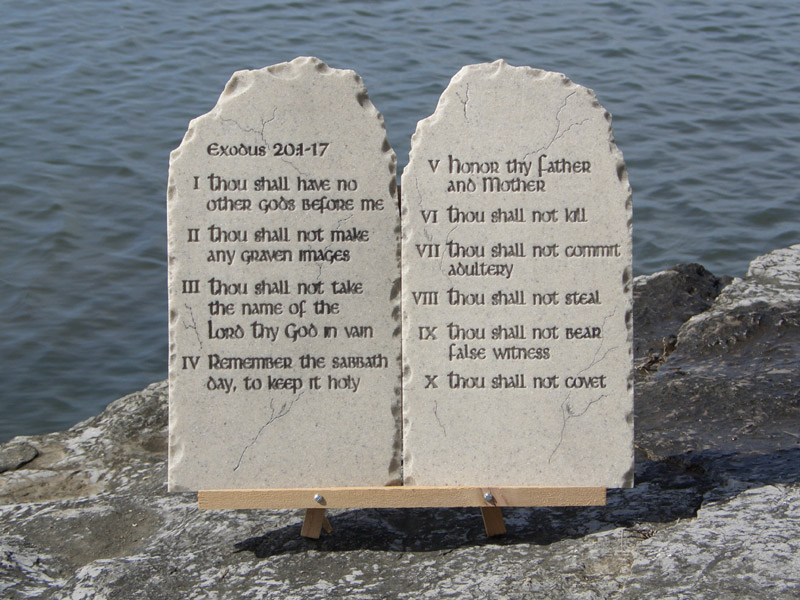
Just think.  If everyone observed these simple maxims, found in the 10 commandments and their consciences, and echoed in Cicero's "Natural Law," would we need government?  No.  Of course not, other than perhaps as some minor local tax collector who would gather funds to build roads or as some judge between minor cases of misunderstandings.  People would do what is good and right and fair, without anyone trying to force them to do it, and without anyone trying to get out of it :).

So, going back to what I have read in history and in my study of governments and society, there is no possible form of government where people can be free to obtain and use their money and resources to support their lives and families without virtue of the people. None. There is no such thing as a government powerful enough to force people to do good, without giving it the power to force them to do evil.

Historic and modern events support the common idiom:


Absolute power corrupts...absolutely.

The Founding Fathers of the United States of America knew this from their own study of history, thus creating our Constitution with important limitations and safeguards.  However, even they knew that only with virtue of the people would we be able to reap the benefits of their work, and use the Constitution for the intent for which it was created.


We must echo Elaine Dalton's call for a "return to virtue" as we look at society.  As people look to their hearts and their God, in whatever form they worship Him, they will know what they must do, and what that answer is for themselves.


Ahhhh.  But how to encourage people to do that, to choose to sacrifice and be virtuous over the pursuit of selfishness?  How do we encourage people to not be dishonest, to not take advantage of one's neighbor, to honestly look at what they have and what they need and use the excess to reach out and help others?  

That remains the question to be answered before we can answer the question how to maintain a government that perserves our freedom.

It must begin, one person at a time, and it must begin today...with you and with me.d

Obviously, I have a long way to go in my effort to learn how to make my passion for freedom articulate and clear :).  I will trust in God and keep doing what I can, one day at a time. 

**************************
Excerpt from "The Divinely Inspired Constitution"
U.S. citizens have an inspired Constitution, and therefore, what? Does the belief that the U.S. Constitution is divinely inspired affect citizens’ behavior toward law and government? It should and it does.
U.S. citizens should follow the First Presidency’s counsel to study the Constitution. 17 They should be familiar with its great fundamentals: the separation of powers, the individual guarantees in the Bill of Rights, the structure of federalism, the sovereignty of the people, and the principles of the rule of the law. They should oppose any infringement of these inspired fundamentals.
They should be law-abiding citizens, supportive of national, state, and local governments. The twelfth Article of Faith declares:
“We believe in being subject to kings, presidents, rulers, and magistrates, in obeying, honoring, and sustaining the law.”
The Church’s official declaration of belief states:
“We believe that governments were instituted of God for the benefit of man; and that he holds men accountable for their acts in relation to them. …
“We believe that all men are bound to sustain and uphold the respective governments in which they reside.” (D&C 134:1, 5.)
Those who enjoy the blessings of liberty under a divinely inspired constitution should promote morality, and they should practice what the Founding Fathers called “civic virtue.” In his address on the U.S. Constitution, President Ezra Taft Benson quoted this important observation by John Adams, the second president of the United States:
“Our Constitution was made only for a moral and religious people. It is wholly inadequate to the government of any other.” 18
Similarly, James Madison, who is known as the “Father of the Constitution,” stated his assumption that there had to be “sufficient virtue among men for self-government.” He argued in the Federalist Papers that “republican government presupposes the existence of these qualities in a higher degree than any other form.” 19
It is part of our civic duty to be moral in our conduct toward all people. There is no place in responsible citizenship for dishonesty or deceit or for willful law breaking of any kind. We believe with the author of Proverbs that “righteousness exalteth a nation: but sin is a reproach to any people.” (Prov. 14:34.) The personal righteousness of citizens will strengthen a nation more than the force of its arms.
Citizens should also be practitioners of civic virtue in their conduct toward government. They should be ever willing to fulfill the duties of citizenship. This includes compulsory duties like military service and the numerous voluntary actions they must take if they are to preserve the principle of limited government through citizen self-reliance. For example, since U.S. citizens value the right of trial by jury, they must be willing to serve on juries, even those involving unsavory subject matter. Citizens who favor morality cannot leave the enforcement of moral laws to jurors who oppose them.